
 EN
EN
 English
 Español
 عربى
عربى

Do Jade Heating Pads Really Work? Benefits & Science Explained
Jul 07,2026
Yes, thermal pads do work—and jade heating pads, in particular, deliver scientifically supported benefits that go well beyond ordinary warmth. If you are considering a jade heating pad, the evidence shows it can offer deeper, more consistent heat along with unique properties like far-infrared emission and negative ion generation, which may help ease muscle tension, improve blood flow, and promote relaxation more effectively than standard electric pads.
Do Thermal Pads Really Work?
Thermal pads work by applying sustained heat to the body, a method known as thermotherapy. Heat causes blood vessels to dilate, increasing the flow of oxygen and nutrients to soft tissues while flushing away metabolic waste. A 2013 review in the International Journal of Sports Physical Therapy confirmed that continuous, low-level heat therapy significantly reduces pain and stiffness in conditions like chronic back pain and arthritis. In controlled studies, participants using heat wraps reported up to 60% pain reduction after just a few days of consistent use.
The key to effectiveness lies in temperature and penetration. For therapeutic benefit, the heat source needs to maintain a steady range of about 40–45°C (104–113°F) without cooling down quickly. Most modern thermal pads, including jade versions, achieve this through adjustable controls and materials that store and radiate heat gradually, making the relief both deep and long-lasting.
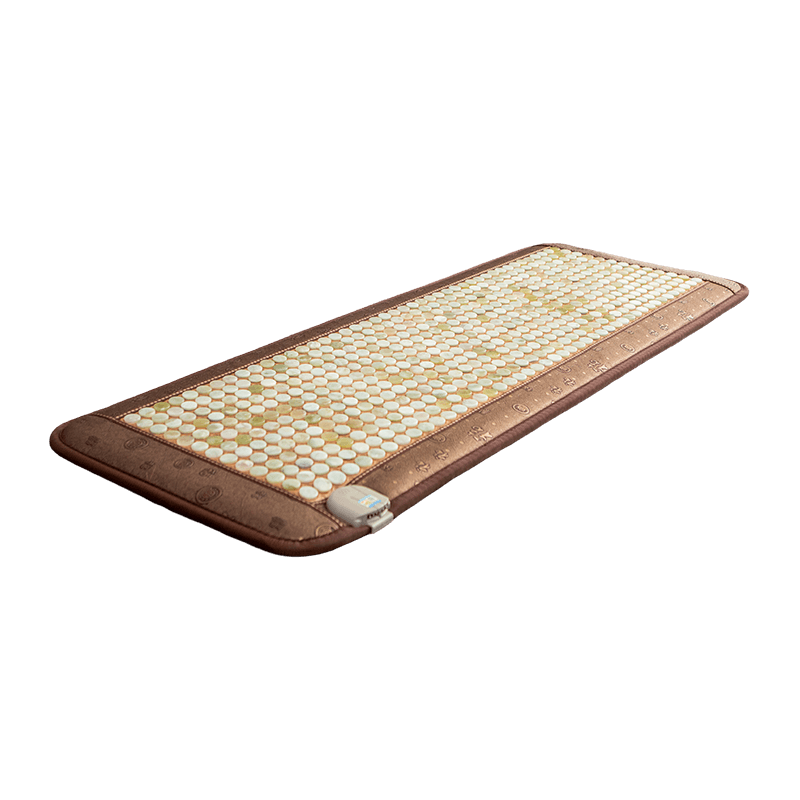
What Are the Benefits of Jade Heating Pads?
Jade heating pads combine traditional thermotherapy with the mineral’s inherent physical properties. Users and studies highlight several specific advantages:
- Deeper heat penetration — Jade has a high thermal mass, meaning it absorbs heat slowly and releases it evenly. This produces a gentle, penetrating warmth that reaches muscles without uncomfortable hot spots.
- Far-infrared ray (FIR) emission — When heated, jade naturally emits far-infrared rays with wavelengths between 4 and 14 microns, which closely match the body’s own radiant energy. FIR can penetrate up to 4–5 cm beneath the skin, potentially improving microcirculation and cellular metabolism.
- Negative ion release — Heating jade generates negative ions, which are thought to increase serotonin levels, reduce stress, and neutralize free radicals. Some studies associate negative ion exposure with improved mood and sleep quality.
- Moist heat option — Many jade pads can be used with a damp cloth or produce humid heat because jade retains water vapor. Moist heat is more efficient than dry heat at raising deep tissue temperature and provides faster relief for spasms.
What Does Jade Do in a Heating Pad?
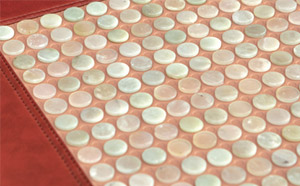
At first glance, jade stones might seem like a luxury add-on, but their role is functional. The material acts as a natural thermal conductor and energy converter. When electricity warms the embedded jade pieces, they transform a basic heating pad into a multi-modal therapy device.
The far-infrared effect is particularly important. Unlike ordinary heated surfaces that primarily warm the air and skin surface, jade stones convert electrical heat into FIR wavelengths that are readily absorbed by the body. Research published in the Journal of Photochemistry and Photobiology indicates that such wavelengths can stimulate the production of nitric oxide, which helps relax blood vessels and increase circulation—one reason why users often describe the heat from a jade pad as “softer” yet more effective.
Additionally, jade is a non-porous, hypoallergenic material that does not degrade with repeated heating cycles. It stays chemically stable, ensuring that the pad remains safe and consistent over hundreds of uses.
| Feature | Jade Heating Pad | Standard Electric Pad |
|---|---|---|
| Primary heat type | Far-infrared & conductive | Conductive only |
| Heat penetration depth | Up to 5 cm | Mostly skin surface to 1 cm |
| Negative ion emission | Yes, naturally when heated | No |
| Heat distribution | Very even, no hot spots | Can develop uneven areas over time |
| Moist heat compatibility | Excellent; stone retains moisture | Limited; fabric may not hold moisture safely |
In short, jade transforms a simple heating pad into a tool that combines thermotherapy, phototherapy, and ion therapy. This triple action helps explain why many users find jade heating pads more effective for stubborn muscle pain, chronic stress, and post-workout recovery than conventional options.
 View More
- +86 188 5837 6736
- [email protected]
- 576 Yunsi West Road, Dayun Town, Jiashan County, Jiaxing City, Zhejiang Province
- Temperature Control Energy Pad
- Temperature-Controlled Energy Cushion
- Temperature Control Energy Belt
- Temperature Control Energy Abdominal Pad
- Temperature-Controlled Energy-Saving Cervical Pillow
- Temperature-Controlled Energy-Saving Lumbar Pillow
- Temperature Control Energy Spinal Pillow
- Electric Cloak (Shoulder And Neck Vest)
- Temperature-Controlled Energy Knee Pads
- Temperature-Controlled Energy-Saving Foot Warmer
- Temperature Control Energy Mattress
- Temperature Control Mattress
Copyright © Jiaxing Fuqiduo Thermal Bed Co., Ltd. All rights reserved.
Wholesale Therapeutic Mattresses Company
 The information provided on this website is intended for use only in countries and jurisdictions outside of the People's Republic of China.