
 EN
EN
 English
 Español
 عربى
عربى
- Temperature Control Energy Pad
- Temperature-Controlled Energy Cushion
- Temperature Control Energy Belt
- Temperature Control Energy Abdominal Pad
- Temperature-Controlled Energy-Saving Cervical Pillow
- Temperature-Controlled Energy-Saving Lumbar Pillow
- Temperature Control Energy Spinal Pillow
- Electric Cloak (Shoulder And Neck Vest)
- Temperature-Controlled Energy Knee Pads
- Temperature-Controlled Energy-Saving Foot Warmer
- Temperature Control Energy Mattress
- Temperature Control Mattress
- Temperature Control Bead Mattress
- Thermal Vest
- Graphene Far-infrared Neck Guard
- Shubeibao
- Jade Board Bed Mattress
- Jade Bead Bed Mattress


Custom Temperature-Controlled Energy-Saving Lumbar Pillow Manufacturers

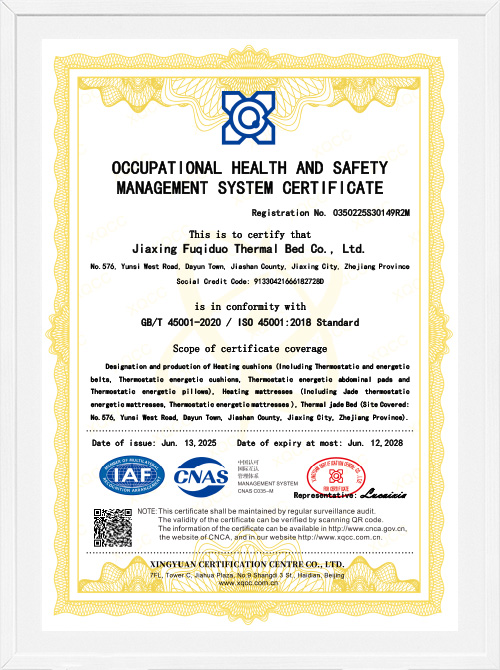
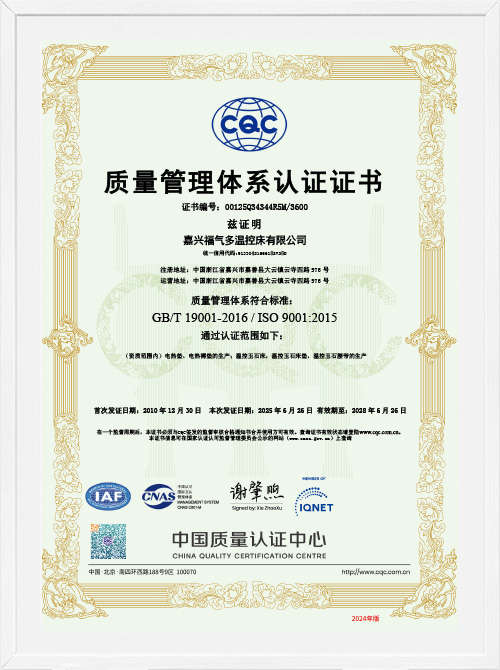
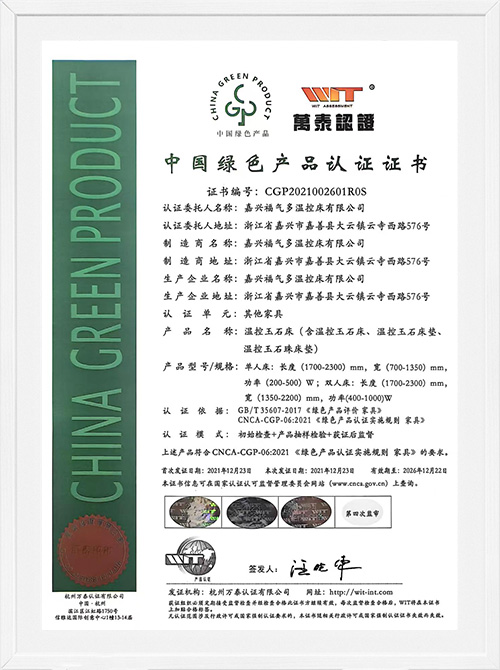
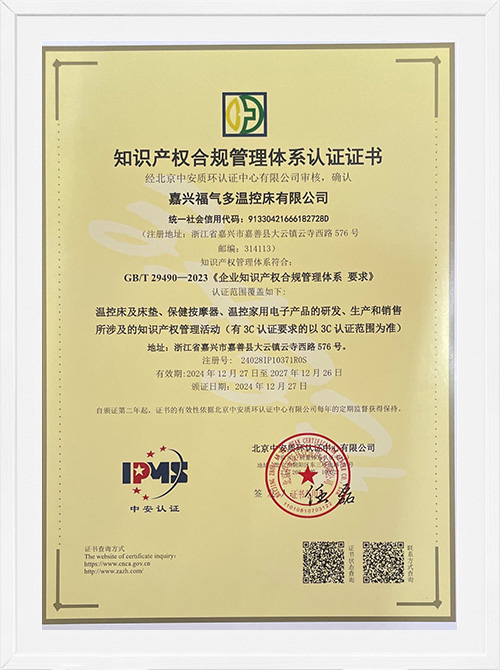
A Zhejiang-based national high-tech enterprise specializing in health bedding solutions. Certified with ISO 9001, China Compulsory Certification, and Zhejiang's "PinZ" Standard for quality excellence. We offer wholesale Temperature-Controlled Energy-Saving Lumbar Pillow for sale.
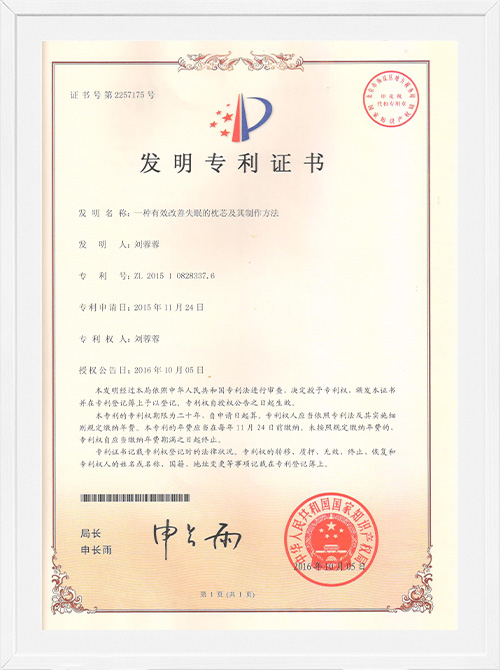
Fuqiduo specializes in thermo-regulated jade mattresses and beaded mats combining premium Xiuyan Jade with smart technology. With over 80 patents including ZL202020088312.3, we're recognized as a Zhejiang Tech SME and AAA Credit Enterprise.
Our social commitment includes the Fuqiduo Love School in Xiuyan County, reflecting our dedication to innovating wellness solutions through quality craftsmanship.
We not only pioneer innovative wellness products but also actively contributes to social welfare. Our philanthropic initiative - the "Fuqiduo Love School" in Xiuyan County has been honored by local education authorities for its meaningful impact on community development.


-
Jul 28,2026
Jade Heating Mattress: How Infrared Heat Therapy Mattresses Work
Jade & Infrared Heat Therapy How Jade Heating Mattresses and Infrared Heating Mattresses Work Jade heating mattresses combine natural jade stones with far infrared heating elements and a temperature controller, and knowing how each part works makes it much easier to judge w...
-
Jul 21,2026
Heated Massage Mats: How They Work & How to Choose One
Heat Therapy & Massage How Heated Massage Mats Work and How to Choose One for Back Pain or Muscle Relaxation A heated massage mat combines localized heat with mechanical or vibration massage, and understanding how each component works makes it much easier to pick a mat suit...
-
Jul 14,2026
How Heated Massage Devices Work: Benefits, Types & Buying Guide
How Does a Heated Massage Device Work A heated massage device combines two separate mechanisms working together: a heating element that raises the temperature of the skin and underlying tissue, and a massage mechanism — kneading nodes, vibration motors, or air compression cells...
How does the thermostat and temperature control system work in the Temperature-Controlled Energy-Saving Lumbar Pillow?
Introduction: The convergence of comfort, wellness, and technology
In the realm of modern ergonomic and wellness products, the integration of smart technology has revolutionized traditional concepts of comfort. Among these innovations, the temperature-controlled energy-saving lumbar pillow stands out as a sophisticated solution designed to address specific physical discomforts while prioritizing efficiency and user safety. This product category represents a significant advancement over simple heated pads or passive support cushions. At the heart of its functionality lies a complex yet user-friendly system of thermal regulation—a system that seamlessly blends sensor data, user input, and precision engineering to deliver a consistent and therapeutic experience. Understanding the mechanics of this system is key to appreciating the value and innovation embedded within such a device.
The core premise of such a pillow is to provide localized heat therapy to the lumbar region, a area notoriously susceptible to stiffness, muscle strain, and poor circulation due to prolonged sitting. However, merely generating heat is a simple task; doing so safely, efficiently, and in a manner that adapts to the user’s needs and environment is where true engineering challenge lies. The system is far more than a simple resistor connected to a power source. It is an integrated network often comprising a heating element, a temperature sensor, a micro-controller, a user interface, and a power management unit. Each component must be meticulously selected and calibrated to work in harmony, ensuring that the pillow provides not just heat, but controlled and efficient heat. This controlled application is what transforms the experience from one of mere warmth to one of genuine therapeutic benefit, promoting muscle relaxation, soothing discomfort, and enhancing overall comfort during extended periods of sedentary activity, whether at an office desk or in a car.
Furthermore, the “energy-saving” aspect of its title is not merely a marketing term but a direct result of its intelligent design. Traditional constant-heat devices consume a steady stream of power regardless of need. In contrast, the advanced thermostat system in a high-quality temperature-controlled energy-saving lumbar pillow is designed to minimize wasteful energy consumption. It achieves this through precise on-off cycling, power modulation, and standby states, ensuring electricity is used only as much as necessary to maintain the user’s desired setting. This efficiency is a critical feature, reducing its environmental footprint and operational cost while enhancing its safety profile by preventing excessive energy draw and heat accumulation. The foundation of this entire system is built upon a legacy of expertise in thermo-regulated health products, drawing from proven technologies used in premium wellness solutions that often incorporate elements like natural jade, known for its heat retention and distribution properties, though the underlying electronic principles remain universally applicable and represent a significant achievement in consumer health technology.
The architectural blueprint: core components of the control system
To deconstruct how the thermostat system functions, one must first become familiar with its essential physical components. Each part plays a distinct and vital role in the process of temperature management, from initiation to sustained operation. These components are miniaturized and integrated into a flexible, durable format suitable for use in a soft goods product like a lumbar pillow, which presents unique challenges compared to rigid electronic devices.
The primary source of warmth is the heating element. Unlike the simple coiled wire resistors found in basic heating pads, the elements in a advanced temperature-controlled energy-saving lumbar pillow are often made from advanced materials such as carbon fiber or flexible graphite ink printed onto a polymer substrate. These materials are chosen for their excellent electrical conductivity, flexibility, durability, and their ability to generate heat evenly across a wide surface area. This even heat distribution is crucial to prevent “hot spots,” which can be uncomfortable and potentially hazardous, and “cold spots,” which diminish the therapeutic effect. The element is strategically embedded within the pillow’s layers to maximize contact with the lumbar region and to ensure heat is transmitted effectively to the user while being insulated from the external environment to improve efficiency.
Acting as the nervous system of the device is the temperature sensor. This is typically a Negative Temperature Coefficient (NTC) thermistor, a type of resistor whose resistance decreases predictably as its temperature increases. This sensor is placed in close proximity to the heating element, often directly on the same flexible circuit, to provide accurate real-time readings of the heat being generated. Its continuous feedback is the primary data source for the entire control loop. Some advanced systems may employ multiple sensors at different points to create a more comprehensive thermal map of the pillow, allowing for even more precise regulation and safety oversight. The accuracy and response time of this sensor are paramount; even a small delay or miscalibration can lead to the system overshooting the target temperature or reacting too slowly to changes.
The brain of the operation is the microcontroller unit (MCU). This is a small, integrated computer chip programmed specifically to manage the thermal system. It receives the resistance data from the NTC thermistor, converts it into a temperature reading based on its pre-programmed algorithms, and compares this reading to the target temperature set by the user. Based on this comparison, the MCU sends commands to the power regulation component. The sophistication of the MCU’s firmware determines the intelligence of the pillow. Basic models may simply toggle power on and off. More advanced units use Proportional-Integral-Derivative (PID) control algorithms to calculate the exact amount of power needed to reach and maintain the set temperature with minimal fluctuation, thereby optimizing both comfort and energy use. This MCU also manages the user interface and safety timers.
Between the MCU’s command and the heating element’s action lies the power regulation component. This is often a solid-state relay or a MOSFET (Metal-Oxide-Semiconductor Field-Effect Transistor). This component acts like a high-speed, precise faucet for electrical current. Upon receiving a signal from the MCU, it adjusts the flow of electricity to the heating element. In a simple on/off system, it acts as a switch. In a more advanced PWM system, it modulates the width of electrical pulses sent to the heater, effectively controlling the average power delivered without constantly cycling the full current on and off. This method is smoother and more efficient.
User interaction is facilitated through an input interface. This is typically a set of buttons or a capacitive touch sensor located on a small control panel attached to the pillow, or sometimes through a remote control or even a smartphone app via Bluetooth. This interface allows the user to set their desired temperature level, usually indicated by LED lights or a digital display, and to turn the system on or off. The design of this interface is crucial for usability, allowing for intuitive operation without complicating the simple act of getting comfortable.
Finally, the entire system is powered by a power supply and management unit. This includes the DC power adapter that plugs into a wall outlet or a vehicle’s 12V socket, converting AC or automotive power to a low-voltage DC current suitable for the pillow’s electronics. This low-voltage operation is a key safety feature, isolating the user from high-voltage mains electricity. The power management unit also safeguards against voltage spikes and ensures a stable current is delivered to the MCU and other components.
Table 1: Core Components and Their Primary Functions
| Component | Primary Function | Key Consideration |
|---|---|---|
| Heating Element | Converts electrical energy into thermal energy (heat). | Material (e.g., carbon fiber), even heat distribution, flexibility. |
| Temperature Sensor (NTC Thermistor) | Measures the current temperature of the heating element. | Accuracy, response time, and placement. |
| Microcontroller (MCU) | The brain; processes sensor data and controls power output. | Programmed control algorithm (e.g., on/off, PID). |
| Power Regulator (e.g., MOSFET) | Executes the MCU’s commands by adjusting current flow to the heater. | Switching speed, efficiency, and heat dissipation. |
| User Interface | Allows the user to input desired temperature settings. | Intuitiveness, clarity (LED indicators). |
| Power Supply | Provides stable, low-voltage DC power to the entire system. | Safety isolation, voltage regulation. |
The operational sequence: a step-by-step journey of thermal regulation
The magic of the temperature-controlled energy-saving lumbar pillow unfolds in a continuous, automated loop. This process, known as a closed-loop control system, ensures that the output (heat) is constantly measured and adjusted to match the desired input (the user’s setting). The sequence can be broken down into several key stages.
It all begins with user initiation and target setting. The user plugs the pillow into an appropriate power source and presses the power button on the control interface. They then select a desired heat level, often ranging from low (e.g., 40°C/104°F) for mild warmth to high (e.g, 55°C/131°F) for more intense therapy. This selected value is stored in the memory of the MCU as the target temperature (Setpoint). The system is now active and begins its primary control loop.
The first step in the loop is data acquisition. The NTC thermistor, embedded within the pillow, constantly measures its own temperature, which is a direct proxy for the temperature of the heating element and the adjacent fabric. The electrical resistance of the thermistor is fed to the MCU. The MCU contains a pre-programmed lookup table or formula that correlates specific resistance values to specific temperatures. It performs this conversion in milliseconds, obtaining a precise numerical value for the current, real-time temperature of the pillow (Process Variable).
Next comes data processing and error calculation. The MCU’s internal logic compares the newly acquired Process Variable (actual temperature) to the stored Setpoint (desired temperature). The difference between these two values is calculated as an “error” signal. For example, if the user set the pillow to 45°C and the sensor reads 30°C, the error is +15°C, meaning the temperature is too low and needs to be increased. Conversely, if the sensor reads 48°C against a 45°C setpoint, the error is -3°C, indicating a need to reduce power.
Based on this error calculation, the MCU executes its control algorithm to decide the necessary action. In a simple on/off control system, the logic is binary: if the temperature is below the setpoint, turn the heater on fully; if it is at or above the setpoint, turn it off. This can lead to temperature oscillations above and below the setpoint. A more sophisticated system, crucial for a product marketed as temperature-controlled, employs a PID algorithm. This algorithm doesn’t just consider the present error (Proportional), but also how long the error has persisted (Integral) and how quickly the error is changing (Derivative). This allows the MCU to predict future temperature trends and modulate power with extreme precision. It can apply just enough power to gently approach the setpoint without overshooting, and then provide tiny bursts of energy to maintain it exactly, resulting in a remarkably stable temperature.
The MCU’s decision is then translated into action via the power regulator. The MCU sends a command signal to the MOSFET or other switching component. In a PWM system, this command is a series of pulses. The “duty cycle” of these pulses—the ratio of “on” time to “off” time within a fixed period—determines the average power delivered. A large error (a cold pillow) will result in a long duty cycle (e.g., 90% on, 10% off), delivering nearly full power to heat up quickly. As the temperature approaches the setpoint, the MCU will shorten the duty cycle (e.g., 30% on, 70% off), providing just enough energy to maintain the temperature without exceeding it. This is the fundamental mechanism behind both precise control and energy savings, as it avoids the wasteful full-power cycling of a simple thermostat.
This entire loop—measure, compare, compute, adjust—runs continuously, thousands of times per second. This creates a dynamic and responsive system that can adapt to changing conditions. For instance, if the user shifts position, allowing a brief rush of cooler air to contact the pillow’s surface, the sensor will detect the slight dip in temperature. The MCU will instantly compute the need for a minor adjustment in power output to compensate, ensuring the user perceives a constant, unwavering level of warmth. This seamless operation is the hallmark of a well-engineered temperature-controlled energy-saving lumbar pillow.
Advanced features and safety protocols: beyond basic temperature control
The underlying thermostat system enables a suite of advanced features that enhance the user experience, safety, and efficiency of the lumbar pillow. These are not standalone additions but are integrated functionalities programmed into the MCU, leveraging the same sensors and control components.
The most critical are the integrated safety features. Any electrical heating device must prioritize user safety, and the intelligent control system provides multiple layers of protection. Auto-shutoff is a standard and non-negotiable feature. The MCU includes a timer that will automatically power down the heating element after a predetermined period, typically between 2 to 4 hours. This prevents the pillow from being left on indefinitely through user forgetfulness, eliminating a potential fire risk and conserving energy. More importantly, overheat protection is built directly into the hardware and software. The primary control loop itself is the first line of defense, maintaining temperature within a safe range. However, a redundant, independent safety circuit—often a thermal fuse or a second thermostat set to a higher critical temperature (e.g., 70°C)—is physically wired in series with the heating element. If the primary MCU system were to fail and the temperature rises dangerously, this fuse will blow or the thermostat will open, permanently or temporarily cutting power until the unit is serviced. This failsafe mechanism is a crucial requirement for reputable safety certifications.
Another key feature enabled by the control system is energy-saving mode. This is where the “energy-saving” aspect of the product’s name is fully realized. Beyond the inherent efficiency of PWM control, some models feature a smart mode where the system, after reaching the target temperature, deliberately allows the temperature to droop by a degree or two before applying a small amount of power to bring it back up. This reduces the average duty cycle even further, minimizing energy consumption while maintaining a perceived level of comfort that is still highly effective for therapeutic purposes. The cumulative effect of this meticulous power management over the lifespan of the product represents a significant reduction in energy use compared to a non-regulated heating pad.
Some high-end models may offer adaptive heating or dual-zone control. Adaptive heating involves the MCU gradually ramping up the temperature to the user’s setpoint over a period of 5-10 minutes, rather than applying full power immediately. This provides a more gentle and comfortable experience, avoiding the shock of sudden intense heat. Dual-zone control involves two separate heating elements and two independent sensor/MCU control loops within a single pillow. This allows the user to set different temperatures for the left and right sides of their lumbar region, providing a highly personalized therapy session that can target asymmetrical pain or simply cater to personal preference. This represents the pinnacle of customization in temperature-controlled technology.
The design and programming of these systems often benefit from extensive research and development in the field of thermo-regulated health products. Expertise gained from developing complex products like heated mattresses and mats, which require large-scale, even heat distribution and precise control, directly informs the miniaturization of this technology into a lumbar pillow. The use of certain natural materials, known for their excellent thermal conductivity and capacity, can further enhance the system’s efficiency. For instance, when a heating element is coupled with materials that store and gently release heat, it reduces the need for the electrical element to cycle on as frequently. The MCU can leverage this passive thermal mass, applying power in bursts and then letting the material’s natural properties maintain the temperature, thus achieving significant energy-saving benefits. This synergy between active electronic control and passive material science is a key differentiator in advanced product design.
- +86 188 5837 6736
- [email protected]
- 576 Yunsi West Road, Dayun Town, Jiashan County, Jiaxing City, Zhejiang Province
- Temperature Control Energy Pad
- Temperature-Controlled Energy Cushion
- Temperature Control Energy Belt
- Temperature Control Energy Abdominal Pad
- Temperature-Controlled Energy-Saving Cervical Pillow
- Temperature-Controlled Energy-Saving Lumbar Pillow
- Temperature Control Energy Spinal Pillow
- Electric Cloak (Shoulder And Neck Vest)
- Temperature-Controlled Energy Knee Pads
- Temperature-Controlled Energy-Saving Foot Warmer
- Temperature Control Energy Mattress
- Temperature Control Mattress
Copyright © Jiaxing Fuqiduo Thermal Bed Co., Ltd. All rights reserved.
Custom
Temperature-Controlled Energy-Saving Lumbar Pillow Factory
 The information provided on this website is intended for use only in countries and jurisdictions outside of the People's Republic of China.