
 EN
EN
 English
 Español
 عربى
عربى

Temperature-Controlled Energy-Saving Foot Warmer & Heated Feet Warmers Guide
Apr 13,2026
Content
Why Temperature-Controlled Foot Warmers Outperform Fixed-Heat Models
A temperature-controlled energy-saving foot warmer maintains a consistent surface temperature by cycling its heating element on and off in response to a built-in thermostat or sensor—rather than drawing continuous power at a fixed wattage. This closed-loop regulation delivers two measurable advantages over fixed-output alternatives: energy consumption is reduced by 30–60% across a typical eight-hour usage session, and the risk of skin contact burns from prolonged exposure to an overheated surface is eliminated by design rather than relying on user vigilance.
For users who work at a desk through cold seasons or who experience poor peripheral circulation—a common condition in older adults and individuals with diabetes—the ability to set a precise comfort temperature between 35°C and 45°C and have the device hold that range automatically represents a meaningful functional improvement over basic resistive foot warmers that simply stay on at full power until unplugged.
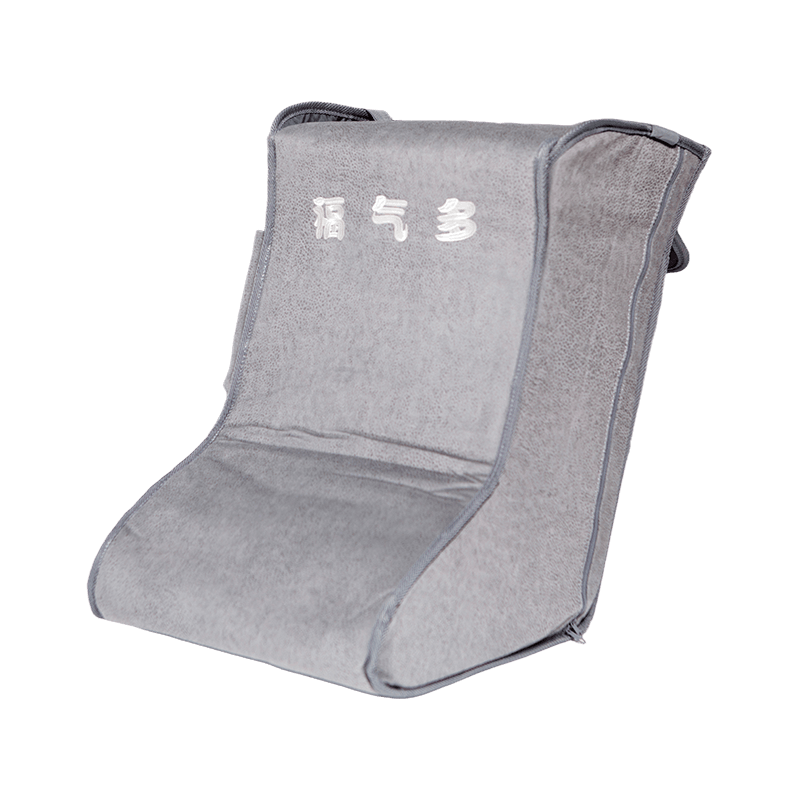
Heating Technologies Used in Heated Feet Warmers
The heating element technology embedded in a foot warmer determines its warm-up speed, temperature uniformity, energy efficiency profile, and long-term reliability. Four principal technologies are used in commercially available products.
Carbon Fiber Heating Elements
Carbon fiber heating films generate far-infrared radiation in the 8–14 µm wavelength range, which penetrates the outer skin layer and warms tissue directly rather than heating only the surface. This produces a subjective warmth sensation at lower surface temperatures than resistive wire elements, allowing the thermostat setpoint to be reduced by 3–5°C for equivalent perceived comfort—a direct energy saving. Carbon fiber elements reach target temperature in 60–90 seconds, have no moving parts, and maintain consistent resistance over their service life. They are the preferred heating technology in premium heated feet warmers intended for users with circulation-related sensitivity.
PTC (Positive Temperature Coefficient) Ceramic Elements
PTC ceramic heating elements are inherently self-regulating: their electrical resistance increases sharply as temperature rises, which reduces current draw and limits heat output as the element approaches its Curie point. This physical property provides a built-in over-temperature protection mechanism that operates independently of the product's electronic thermostat. PTC elements in foot warmers typically stabilize at surface temperatures of 40–55°C without any external control circuit, making them a reliable choice for budget-tier products where component simplicity is prioritized. Their limitation is lower temperature precision compared to NTC thermistor-controlled carbon or wire heating systems.
Nickel-Chromium (NiCr) Resistance Wire
Resistance wire elements are the most established heating technology and offer the lowest manufacturing cost. In temperature-controlled foot warmers, NiCr wire is embedded in silicone rubber or woven into fabric carriers and paired with an NTC thermistor and microcontroller to deliver closed-loop temperature regulation. Wire-based elements can achieve higher watt densities than carbon film, making them suitable for foot warmers that need to heat a larger surface area—such as full under-desk heating mats—from a single circuit. Durability depends heavily on wire gauge and the quality of the insulation material; premium products specify silicone insulation rated to 200°C continuous to ensure longevity under repeated thermal cycling.
Graphene Heating Films
Graphene-based heating elements represent the newest technology category in consumer foot warmers. Their exceptionally high thermal conductivity—theoretically up to 5,000 W/m·K in pure form, though commercial heating film composites achieve more modest values—produces highly uniform temperature distribution across the heating surface with minimal hot spot formation. Graphene films are ultra-thin (typically 0.1–0.3 mm), flexible, and compatible with ergonomic foot warmer enclosures that conform to foot geometry. Products using graphene elements command a price premium but offer the combination of fast heat-up, uniform surface temperature, and low electromagnetic field (EMF) emission that is increasingly specified by health-conscious buyers.
Key Specifications to Compare When Buying Heated Feet Warmers
The specifications that most directly affect daily usability and long-term satisfaction differ from those emphasized in typical product listings. The following parameters should be evaluated systematically before purchase.
| Specification | Entry-Level Range | Premium Range | Why It Matters |
|---|---|---|---|
| Rated wattage | 60–100 W | 25–55 W | Lower wattage with thermostat = lower running cost |
| Temperature range | Fixed or 2–3 levels | 35–55°C adjustable | Precise control improves comfort and safety |
| Warm-up time | 3–8 minutes | 60–120 seconds | Fast heat-up reduces cold waiting time |
| Auto shut-off timer | None or fixed 2 hr | 1–8 hr programmable | Prevents energy waste and fire risk if left on |
| Heating surface area | 200–300 cm² | 400–700 cm² | Larger surface covers full foot including ankles |
| Safety certification | None or local only | CE / ETL / UL / GS | Verifies overtemperature and electrical safety |
A frequently overlooked specification is the outer surface material and washability. Foot warmers used daily accumulate moisture and odor; products with removable, machine-washable covers or wipeable hard-shell surfaces maintain hygiene through extended use seasons in a way that fixed-upholstery models cannot.
Safety Standards and Certifications for Heated Feet Warmers
Because heated feet warmers operate in direct prolonged contact with skin—often while the user is seated and distracted—the safety requirements governing these products are more stringent than for general small appliances. Key standards and the protections they mandate include:
- IEC 60335-2-17 — The international standard specifically governing electrically heated blankets, pads, and similar flexible heating appliances. It mandates maximum surface temperature limits of 43°C for skin-contact surfaces, overtemperature cutout requirements, and construction standards for the heating element and supply cord.
- CE marking (EU) — Confirms compliance with the Low Voltage Directive (LVD 2014/35/EU) and the Electromagnetic Compatibility Directive. Required for all heated appliances sold in European markets.
- UL 964 / ETL (North America) — UL 964 covers electrically heated bedding and body-warming products in the U.S. market. ETL listing from Intertek provides equivalent market acceptance. Both require independent laboratory testing of thermal cutout performance and dielectric strength.
- GS mark (Germany) — The Geprüfte Sicherheit (tested safety) mark, issued by TÜV or similar notified bodies, is one of the most rigorous voluntary safety marks for consumer heating products in Europe and carries significant buyer trust value in German-speaking markets.
- Overheat protection and thermal fuse — Independent of the main thermostat, a thermal fuse or thermal cutout that permanently disconnects the circuit at a defined over-temperature threshold (typically 85–95°C at the heating element) is required by IEC 60335-2-17 as a second line of defense against uncontrolled heating.
For buyers sourcing heated feet warmers for resale or commercial deployment—in office environments, elderly care facilities, or hospitality settings—requesting test reports from the manufacturer's third-party certification laboratory and verifying certificate validity on the issuing body's online database is standard due diligence that significantly reduces product liability exposure.
Energy Consumption and Cost Efficiency in Daily Use
The energy-saving claim attached to temperature-controlled foot warmers is quantifiable. A conventional fixed-wattage foot warmer rated at 80 W running for eight hours consumes 0.64 kWh per session. A thermostatically controlled 45 W model that cycles at an average duty cycle of 50%—typical during the maintenance phase after reaching setpoint—consumes approximately 0.18 kWh for the same session, a reduction of over 70%. At an electricity rate of USD 0.15/kWh, this difference amounts to roughly USD 0.07 per day, or approximately USD 18–22 per heating season across five months of daily use—a modest but real saving that compounds across multi-unit office deployments.
Products that combine temperature control with a programmable timer—allowing the unit to pre-heat before the user arrives at their desk and shut off automatically after a set period—extend this efficiency advantage further. Timer-equipped models used with a 6-hour daily schedule rather than being left on continuously during work hours consistently outperform uncontrolled models by the widest margins in measured energy audits of office heating accessories.
 View More
- +86 188 5837 6736
- [email protected]
- 576 Yunsi West Road, Dayun Town, Jiashan County, Jiaxing City, Zhejiang Province
- Temperature Control Energy Pad
- Temperature-Controlled Energy Cushion
- Temperature Control Energy Belt
- Temperature Control Energy Abdominal Pad
- Temperature-Controlled Energy-Saving Cervical Pillow
- Temperature-Controlled Energy-Saving Lumbar Pillow
- Temperature Control Energy Spinal Pillow
- Electric Cloak (Shoulder And Neck Vest)
- Temperature-Controlled Energy Knee Pads
- Temperature-Controlled Energy-Saving Foot Warmer
- Temperature Control Energy Mattress
- Temperature Control Mattress
Copyright © Jiaxing Fuqiduo Thermal Bed Co., Ltd. All rights reserved.
Wholesale Therapeutic Mattresses Company
 The information provided on this website is intended for use only in countries and jurisdictions outside of the People's Republic of China.