
 EN
EN
 English
 Español
 عربى
عربى

Infrared Heating Pad Benefits: Jade, Tourmaline & Back Pain Relief
Jun 02,2026
Content
- 1 Do Infrared Heating Pads Work? The Science Behind the Heat
- 2 Infrared Heat Pad Benefits: What Consistent Use Can Deliver
- 3 Jade and Tourmaline Heating Pad Benefits: Why Gemstones Are Used
- 4 Using an Infrared Pad for Back Pain: Practical Guidance
- 5 Choosing an Infrared Heating Pad: Key Features to Compare
Do Infrared Heating Pads Work? The Science Behind the Heat
Infrared heating pads do work — but in a meaningfully different way from conventional electric heating pads. A standard resistive heating pad warms the surface of the skin by conduction. An infrared heating pad emits far-infrared radiation (FIR), a band of electromagnetic energy with wavelengths between approximately 4 and 14 micrometers that the human body both produces and readily absorbs. When this wavelength range reaches skin, it is not reflected but converted directly into heat within the tissue — penetrating an estimated 2 to 7 centimeters below the surface, compared to the superficial warming of conventional pads.
This deeper thermal effect drives the core mechanisms that make infrared heat therapeutically useful:
- Vasodilation — warming deep tissue triggers dilation of blood vessels, increasing local circulation and accelerating the delivery of oxygen and nutrients to muscle and connective tissue.
- Muscle relaxation — elevated intramuscular temperature reduces the sensitivity of muscle spindles, lowering resting muscle tone and relieving spasm.
- Metabolic waste clearance — improved circulation helps flush lactic acid and inflammatory byproducts from overworked or injured tissue.
- Gate control analgesia — thermal stimulation activates large-diameter nerve fibers that competitively inhibit pain signal transmission through the dorsal horn, reducing perceived pain intensity.
Clinical evidence supports these mechanisms. A 2012 study published in the Journal of Alternative and Complementary Medicine found that chronic low back pain patients using far-infrared therapy experienced significantly greater reductions in pain and disability scores compared to controls. A 2006 pilot study in Internal Medicine reported sustained pain relief and improved quality of life in fibromyalgia patients following repeated FIR sauna sessions. While large-scale randomized controlled trials remain limited, the physiological basis is well-established in thermal medicine literature.
Infrared Heat Pad Benefits: What Consistent Use Can Deliver
The benefits of infrared heat pads extend beyond simple surface warmth, and they accumulate with regular use rather than being limited to the duration of a single session.
Pain Relief and Stiffness Reduction
The most commonly reported benefit is relief from chronic musculoskeletal pain — particularly in the lower back, shoulders, hips, and knees. The combination of deep tissue warming and gate-control analgesia makes infrared pads especially effective for conditions where both muscle tension and nerve sensitization contribute to pain, such as myofascial pain syndrome and osteoarthritis. Unlike oral analgesics, there is no systemic drug exposure, making regular use appropriate for long-term pain management protocols.
Improved Circulation
FIR-induced vasodilation increases microvascular perfusion in treated areas. This is particularly beneficial for individuals with poor peripheral circulation, those recovering from soft tissue injuries, or athletes seeking faster recovery between training sessions. Improved blood flow to tendons and ligaments — which are naturally low in vascularity — may support tissue repair in areas that heal slowly under conventional rest protocols.
Joint Mobility and Flexibility
Collagen-rich structures including joint capsules, tendons, and fascia become more extensible when warmed. Using an infrared pad for 15 to 20 minutes before stretching or physical therapy exercises can meaningfully increase tissue compliance, allowing greater range of motion with less discomfort. This warm-up effect is more durable than surface-only heat because the deeper temperature elevation persists longer after the pad is removed.
Stress and Sleep
Whole-body or targeted thermal therapy has documented effects on the autonomic nervous system, shifting the balance toward parasympathetic dominance. Evening use of an infrared pad — particularly in the 30–60 minutes before sleep — may support relaxation and improve sleep onset for individuals whose insomnia is linked to chronic pain or muscle tension. The relaxation response is attributed to both the direct effect of heat on muscle tone and the release of endorphins triggered by thermal stimulation.
Jade and Tourmaline Heating Pad Benefits: Why Gemstones Are Used
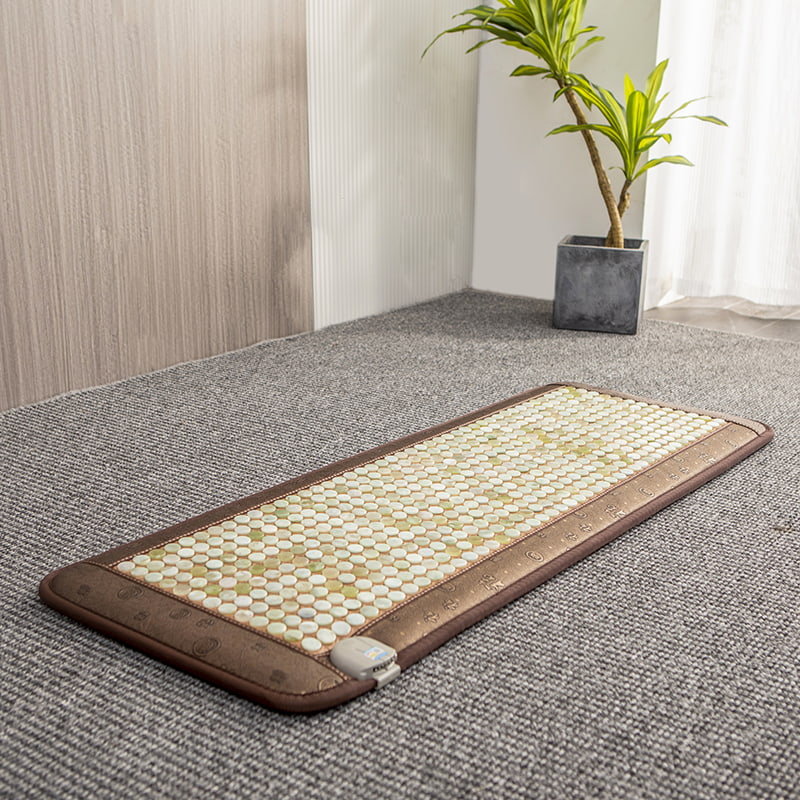
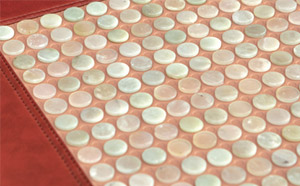
Many infrared heating pads incorporate layers of crushed or polished gemstones — most commonly jade, tourmaline, or a combination of both — between the heating element and the contact surface. Understanding why requires distinguishing between what the stones actually do physically and what is often claimed without strong evidence.
The Physical Role of Jade
Jade (typically nephrite or jadeite) is a dense stone with high thermal mass and good thermal conductivity. When embedded in a heating mat and warmed electrically, it functions as a thermal buffer and emitter: it stores heat efficiently, distributes it evenly across its surface, and emits far-infrared radiation at wavelengths closely matching the human body's absorption spectrum — approximately 8 to 10 micrometers. The stone's density prevents hot spots and maintains a more consistent temperature profile than a plain resistive wire mat. Historically, jade has been used in East Asian wellness practices for centuries, contributing to its premium positioning in the heating pad market.
The Role of Tourmaline
Tourmaline is a boron silicate mineral with a documented physical property: it is pyroelectric and piezoelectric, meaning it generates a small electric field when heated or subjected to mechanical pressure. This charge differential causes water molecules in the immediate environment to ionize, releasing negative ions. Negative ion emission is the primary claimed benefit of tourmaline in heating pads — proponents argue that negative ions improve mood, reduce oxidative stress, and enhance cellular function. Research on localized negative ion effects from gemstone surfaces remains limited, and the concentrations generated by a heated tourmaline mat are substantially lower than those measured in natural environments like waterfalls or forests, where negative ion effects have been more systematically studied.
The practical, evidence-supported benefit of a jade and tourmaline heating pad over a basic electric pad is primarily the quality and consistency of far-infrared emission. The stone layer converts electrical heat into FIR radiation more efficiently than resistive wire alone, produces more uniform surface temperatures, and retains warmth after the heater cycles off. These are meaningful engineering advantages for therapeutic use, distinct from the more speculative claims about negative ions or crystal energy.
| Stone | Key Physical Property | Therapeutic Role in Pad |
|---|---|---|
| Jade | High thermal mass, even heat distribution | Consistent FIR emission, no hot spots |
| Tourmaline | Pyroelectric, negative ion emission when heated | FIR emission + claimed ionization effect |
| Amethyst | Quartz structure, FIR conductive | FIR amplification, found in premium full-body mats |
Using an Infrared Pad for Back Pain: Practical Guidance
Back pain is the leading application for infrared heating pads, and the conditions that respond best share a common profile: chronic, non-inflammatory, soft-tissue origin. This includes muscle tension, myofascial trigger points, sacroiliac joint stiffness, and degenerative disc discomfort. Infrared heat is not appropriate during the acute inflammatory phase of an injury (typically the first 24–72 hours after onset), when heat would increase swelling and tissue perfusion around an already inflamed site. Cold therapy is preferred during this window.
Session Length and Temperature
For chronic lower back pain, sessions of 20 to 45 minutes at temperatures between 40°C and 50°C (104°F–122°F) are commonly recommended. Lower temperatures in this range are suitable for daily use and for individuals with sensitive skin. Higher temperatures should be reserved for shorter sessions and used with a thin cloth layer between the pad and bare skin to prevent contact burns, particularly for users who may have reduced skin sensitivity due to diabetes or peripheral neuropathy.
Positioning for Lower Back vs. Upper Back
For lower back pain, lying supine with the pad positioned beneath the lumbar spine and sacrum is most effective — gravity maintains even contact and allows full relaxation of the erector spinae and quadratus lumborum. For upper back and thoracic pain, a seated position with the pad against the chair back, or lying prone, distributes heat across the trapezius and rhomboid regions. A full-length mat is more versatile for individuals with pain spanning multiple spinal regions simultaneously.
Frequency and Long-Term Use
Most users with chronic back pain benefit from daily or twice-daily sessions, particularly in the morning to address stiffness that accumulates overnight and in the evening before sleep. Unlike NSAIDs or muscle relaxants, there is no ceiling on frequency from a pharmacological standpoint — the primary constraint is avoiding prolonged exposure at high temperatures that could cause skin irritation or low-temperature burns. Rotating the pad to different areas within a session, or alternating with gentle movement afterward, helps translate the therapeutic warmth into functional improvement rather than passive relief alone.
Who Should Exercise Caution
Infrared pads are contraindicated or require medical clearance for individuals with active cancer in the treatment area, implanted electronic devices (pacemakers, spinal cord stimulators), open wounds, deep vein thrombosis, or pregnancy. Those with impaired thermal sensation — common in diabetic neuropathy — should use the lowest effective temperature setting and check the skin surface regularly during sessions.
Choosing an Infrared Heating Pad: Key Features to Compare
Not all products marketed as infrared heating pads deliver equivalent therapeutic output. These are the specifications that meaningfully differentiate models:
- EMF shielding — heating elements generate electromagnetic fields. Quality pads use shielded carbon fiber or negative potential carbon wire that reduces EMF emissions to near-zero at the contact surface. Look for models that provide EMF test data, ideally below 2 milligauss at skin contact.
- Stone layer density and coverage — more stone tiles mean better FIR coverage and less variation between tile and inter-tile zones. Pads with widely spaced stones have thermal gaps where only resistive heat reaches the skin.
- Temperature range and controller precision — a controller that allows incremental adjustment (rather than just low/medium/high) gives better control over therapeutic temperature. Digital controllers with auto-shutoff timers (typically 2–4 hours) are a safety standard on reputable models.
- Size and flexibility — larger mats (full-body or full-torso length) provide more versatile positioning. However, flexibility matters for conforming to body contours; rigid mats may leave gaps over the lumbar curve.
- Certifications — CE, RoHS, and FCC certifications address electrical safety and materials compliance. FDA registration (as a Class II medical device in the US) indicates the manufacturer has filed performance data with the FDA, though it does not imply clinical trial approval.
The difference between a well-engineered infrared mat with dense jade and tourmaline coverage, low EMF output, and a precise temperature controller, and a basic promotional product with a thin stone layer, is substantial — both in the quality of FIR delivery and in long-term durability. For therapeutic use involving daily sessions over months or years, investing in a unit with verifiable specifications is worth the higher upfront cost.
 View More
- +86 188 5837 6736
- [email protected]
- 576 Yunsi West Road, Dayun Town, Jiashan County, Jiaxing City, Zhejiang Province
- Temperature Control Energy Pad
- Temperature-Controlled Energy Cushion
- Temperature Control Energy Belt
- Temperature Control Energy Abdominal Pad
- Temperature-Controlled Energy-Saving Cervical Pillow
- Temperature-Controlled Energy-Saving Lumbar Pillow
- Temperature Control Energy Spinal Pillow
- Electric Cloak (Shoulder And Neck Vest)
- Temperature-Controlled Energy Knee Pads
- Temperature-Controlled Energy-Saving Foot Warmer
- Temperature Control Energy Mattress
- Temperature Control Mattress
Copyright © Jiaxing Fuqiduo Thermal Bed Co., Ltd. All rights reserved.
Wholesale Therapeutic Mattresses Company
 The information provided on this website is intended for use only in countries and jurisdictions outside of the People's Republic of China.