
 EN
EN
 English
 Español
 عربى
عربى

Heating Pad & Heat Therapy Massage: Pain Relief & Temperature Guide
Jun 10,2026
Content
- 1 Heating Pad vs. Heating Stone Bed: Which Delivers Better Therapeutic Heat?
- 2
- 3 Does Back Massage Help Pain? What the Evidence Shows
- 4 Heat Therapy Massage: Combining Warmth and Manual Pressure for Greater Relief
- 5 Stress Relief Back Massage Points: The Key Locations That Actually Work
- 6 Temperature Control in Energy Pads: Why Precision Matters for Safe, Effective Heat Therapy
Heating Pad vs. Heating Stone Bed: Which Delivers Better Therapeutic Heat?
Both a heating pad and a heating stone bed deliver therapeutic warmth to the body, but they differ substantially in how that heat is generated, stored, and transferred — and those differences matter for pain relief, energy efficiency, and long-term comfort.
A conventional electric heating pad uses resistive wire elements embedded in fabric to produce surface-level dry heat. It warms quickly (typically within 2–5 minutes), offers simple temperature adjustment, and is best suited for short-duration targeted applications — a sore shoulder, menstrual cramps, or a stiff knee.
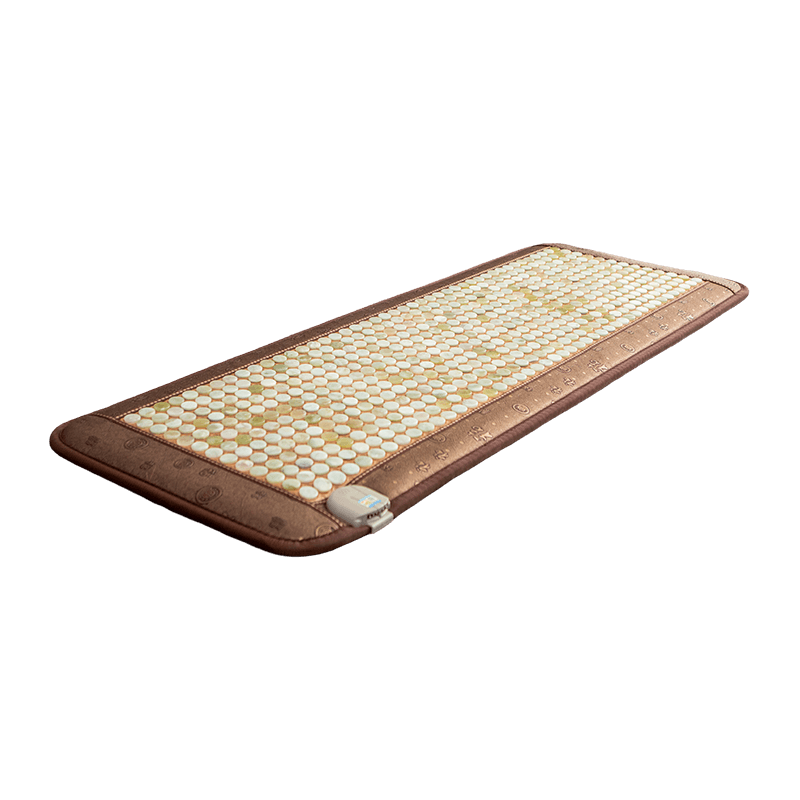
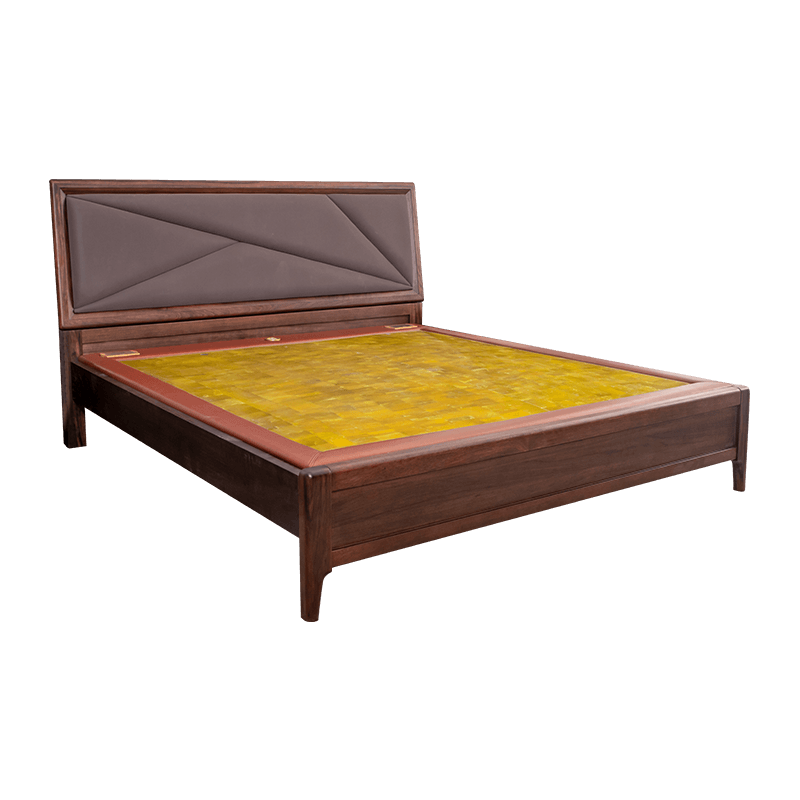
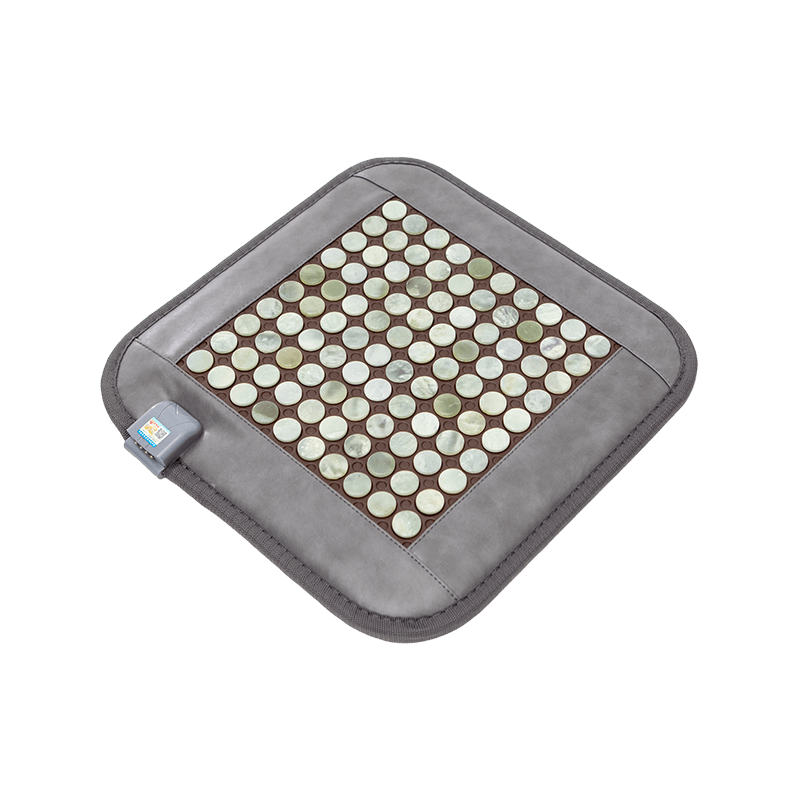
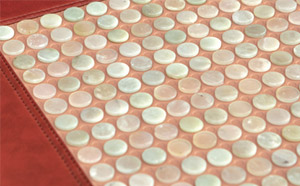
A heating stone bed — also called a jade stone mat, tourmaline mat, or far-infrared stone pad — operates on a fundamentally different principle. Natural stones such as jade, tourmaline, or amethyst are embedded in a mat and heated by an electric element beneath them. The stones absorb and re-emit heat as far-infrared radiation (FIR), with wavelengths between 4 and 14 micrometers. This range penetrates 4–6 cm into soft tissue — significantly deeper than the surface contact heat of a standard pad.
Key practical differences between the two:
| Feature | Electric Heating Pad | Heating Stone Bed |
|---|---|---|
| Heat type | Conductive surface heat | Far-infrared radiant heat |
| Penetration depth | ~1 cm (skin and subcutaneous tissue) | 4–6 cm (muscle and joint level) |
| Warm-up time | 2–5 minutes | 15–30 minutes |
| Heat retention after power-off | Cools within minutes | Stones retain heat 30–60 minutes |
| Best use case | Quick targeted relief | Full-body relaxation, chronic pain |
| Typical session length | 15–30 minutes | 30–60 minutes |
For users dealing with chronic lower back pain, muscle stiffness, or joint inflammation, a heating stone bed's deeper penetration and sustained thermal output often makes it the more effective tool. For acute localized discomfort that needs immediate relief, a standard heating pad remains practical and sufficient.
Does Back Massage Help Pain? What the Evidence Shows
Yes — back massage demonstrably helps reduce pain, particularly for non-specific low back pain, the most common musculoskeletal complaint in adults globally. A 2015 Cochrane systematic review analyzing 25 randomized controlled trials found that massage therapy produced significantly greater short-term improvements in pain and function compared to no treatment, sham therapy, or relaxation for low back pain.
The mechanisms behind this are well understood:
- Increased local circulation — mechanical pressure from massage dilates capillaries and speeds oxygen and nutrient delivery to hypoxic muscle tissue, accelerating recovery from micro-damage and fatigue
- Reduced muscle tension and spasm — sustained pressure on hypertonic muscle fibers triggers the Golgi tendon organ reflex, causing involuntary relaxation of contracted tissue
- Endorphin and serotonin release — tactile stimulation activates the body's endogenous analgesic system, reducing pain perception independently of any structural change
- Reduced cortisol — studies measuring salivary cortisol before and after massage sessions consistently show reductions of 20–30%, linking massage to measurable physiological stress reduction
Massage is most effective for subacute and chronic low back pain (duration longer than 4 weeks). For acute back pain from sudden injury or disc herniation, professional evaluation should precede any massage intervention to rule out contraindications such as fracture, tumor, or cauda equina syndrome.
Heat Therapy Massage: Combining Warmth and Manual Pressure for Greater Relief
Heat therapy massage combines the vasodilatory and tissue-softening effects of applied heat with the mechanical benefits of massage — producing synergistic outcomes that neither modality achieves alone. Pre-warming muscles with heat before or during massage reduces tissue resistance, allowing deeper pressure to reach target structures with less superficial discomfort.
In clinical settings, this combination is commonly called thermomassage or thermo-mechanical therapy. Research published in the Journal of Clinical Rheumatology found that combining heat with massage reduced low back pain scores by an additional 28% compared to massage alone over a four-week intervention period.
Practical Heat + Massage Protocols
The sequence and timing of heat application shapes the outcome:
- Heat before massage (10–15 min pre-warm) — increases tissue extensibility, making stretching and deep tissue work more effective and less painful; recommended for chronic stiffness
- Concurrent heat during massage — using a heated stone bed or warming pad simultaneously with massage maintains elevated tissue temperature throughout the session; ideal for full-body relaxation treatments
- Heat after massage (15–20 min post-session) — helps flush metabolic waste released from manipulated tissue by sustaining increased local blood flow; reduces next-day soreness
Temperature during heat therapy massage should be maintained between 40°C and 45°C (104°F–113°F) at the skin surface. Above 45°C, prolonged contact risks superficial burns — particularly when heat is applied to already-sensitized or inflamed tissue.
Stress Relief Back Massage Points: The Key Locations That Actually Work
Targeting specific anatomical points during back massage produces more reliable stress and pain relief than generalized rubbing. These locations correspond to areas of high motor point density, known acupressure nodes, or common trigger point sites — all of which respond strongly to sustained manual pressure or localized heat.
The most clinically relevant stress relief back massage points are:
- GV14 (Dazhui) — base of the neck, between C7 and T1: One of the primary acupressure points for stress and anxiety. Located at the prominent vertebral bump at the base of the neck. Sustained pressure here reduces tension headache and upper trapezius tightness. In traditional Chinese medicine, it is classified as a meeting point of all yang meridians.
- BL23 (Shenshu) — lumbar region, 1.5 cun lateral to L2: The primary back-shu point of the kidney meridian, located approximately 4 cm lateral to the second lumbar vertebra on each side. Stimulation here reliably reduces low back aching and is widely used in both acupressure and myofascial release protocols for chronic lumbar tension.
- BL10 (Tianzhu) — upper neck, base of skull: Located approximately 1.3 cun lateral to GV15, just below the occipital ridge. This is a classic point for relieving stress-related neck stiffness, occipital headache, and shoulder tension accumulated from prolonged desk work.
- Trapezius trigger points — midpoint of the upper trapezius muscle: The most commonly active trigger points in office workers and stressed individuals. Located at the midpoint between the neck and shoulder tip. Sustained ischemic compression for 60–90 seconds — until the local muscle twitch response subsides — is the standard release technique.
- Sacral hiatus region — base of spine: The flattened triangular bone at the base of the spine has a dense concentration of parasympathetic nerve roots. Gentle sustained heat and light pressure applied here activates a systemic relaxation response, lowering heart rate and reducing the physiological markers of stress.
Applying a temperature-controlled heating pad or stone mat directly over these points for 20–30 minutes before massage, or incorporating stone massage tools warmed to 50–55°C for point work, amplifies the local relaxation effect without requiring significant manual pressure.
Temperature Control in Energy Pads: Why Precision Matters for Safe, Effective Heat Therapy
A temperature control energy pad — referring to any heated therapy mat with electronic temperature regulation — is only as effective and safe as the accuracy and stability of its control system. Imprecise temperature management is the primary cause of both therapeutic underperformance (insufficient warmth to produce vasodilation) and burn injury (excessive surface temperature during prolonged contact).
Modern high-quality energy pads use one of three control architectures:
- NTC thermistor-based closed-loop control — a negative temperature coefficient sensor embedded in the mat surface continuously feeds temperature readings back to a microcontroller, which adjusts heating element power in real time. This is the most common architecture in mid-to-premium mats, typically holding temperature within ±2°C of the set point.
- PTC (positive temperature coefficient) self-regulating elements — the heating element itself changes resistance with temperature, naturally limiting power as the material heats up. PTC systems are inherently safe against runaway overheating but offer less precise user-defined temperature control.
- Dual-sensor redundant systems — premium far-infrared stone mats use two independent sensors: one monitoring the stone surface temperature and one measuring ambient room temperature to compensate for environmental variation. This architecture maintains consistent therapeutic output regardless of ambient conditions.
For therapeutic use, the clinically recommended temperature ranges are:
- 35–40°C (95–104°F) — gentle warmth; suitable for relaxation, stress relief, and users with heat sensitivity
- 40–45°C (104–113°F) — active therapeutic range; effective for vasodilation, muscle relaxation, and pain relief with sessions up to 30–45 minutes
- 45–50°C (113–122°F) — intensive heat; suitable for short sessions (10–15 minutes maximum), target hardened trigger points, or users with high heat tolerance; not recommended for sensitive skin
- Above 50°C (122°F) — risk zone for prolonged contact; should only be used under professional supervision or for brief stone massage tool applications with constant movement
An auto shut-off timer — typically configurable from 30 minutes to 4 hours — is a non-negotiable safety feature for any energy pad intended for unattended use, sleep, or extended rest sessions. Without it, falling asleep on a continuously powered pad significantly increases burn risk, particularly at the bony prominences of the spine and sacrum where blood flow is limited.
Energy consumption is a secondary but practical consideration: a well-designed temperature control energy pad should reach operating temperature efficiently and cycle power intermittently to maintain it, rather than running at full wattage continuously. A 60W far-infrared mat with good thermal regulation typically consumes the equivalent of 20–30W in steady-state operation — comparable to a desktop lamp — making extended daily use economically practical.
 View More
- +86 188 5837 6736
- [email protected]
- 576 Yunsi West Road, Dayun Town, Jiashan County, Jiaxing City, Zhejiang Province
- Temperature Control Energy Pad
- Temperature-Controlled Energy Cushion
- Temperature Control Energy Belt
- Temperature Control Energy Abdominal Pad
- Temperature-Controlled Energy-Saving Cervical Pillow
- Temperature-Controlled Energy-Saving Lumbar Pillow
- Temperature Control Energy Spinal Pillow
- Electric Cloak (Shoulder And Neck Vest)
- Temperature-Controlled Energy Knee Pads
- Temperature-Controlled Energy-Saving Foot Warmer
- Temperature Control Energy Mattress
- Temperature Control Mattress
Copyright © Jiaxing Fuqiduo Thermal Bed Co., Ltd. All rights reserved.
Wholesale Therapeutic Mattresses Company
 The information provided on this website is intended for use only in countries and jurisdictions outside of the People's Republic of China.